Effective workplace first aid is not simply about having a kit available. It depends on understanding the risks within your organisation, providing suitable equipment and making sure people can access it quickly when an incident occurs.
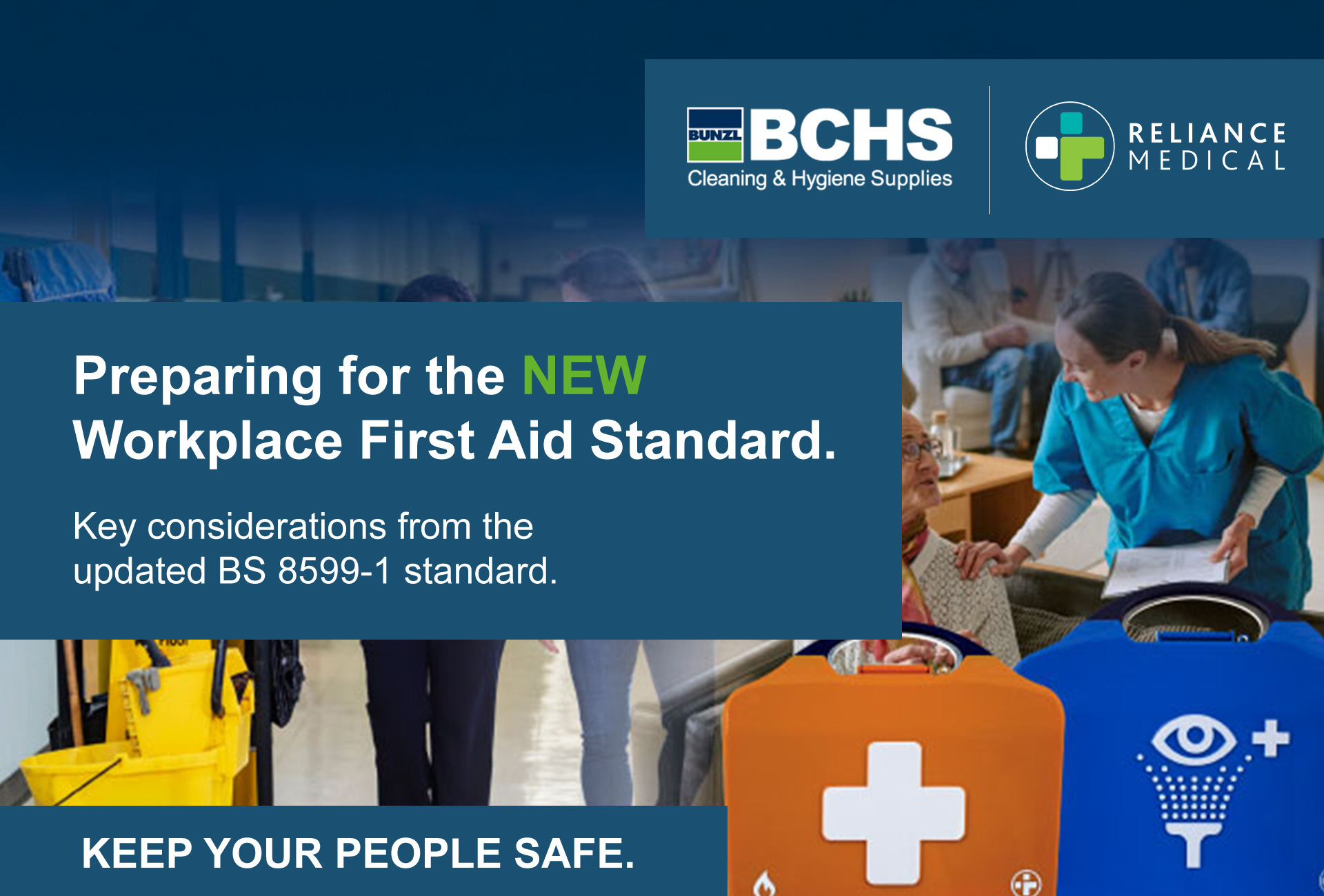
The updated BS 8599-1 workplace first aid standard provides organisations with guidance on selecting and managing first aid provision. It also places renewed focus on risks such as burns and eye injuries, alongside access to automated external defibrillators, or AEDs.
For facilities, cleaning, leisure, healthcare and other operational environments, the update is a useful opportunity to review whether current arrangements remain suitable for the workplace.
Keeping your people safe…
Every workplace is different. The appropriate level of first aid provision will depend on factors including:
- The hazards associated with the work being carried out
- The number of employees, visitors and customers on site
- The size, layout and location of the premises
- Working patterns, including shifts and lone working
- The needs of people travelling or working away from the main site
- How quickly further medical assistance can be accessed
Keeping people safe is about more than simply having a first aid kit on the wall. It means assessing the risks within your workplace, providing appropriate first aid equipment and ensuring potentially life-saving resources can be reached quickly.
Your existing British Standard workplace first aid kits remain compliant with the law, provided you have recently completed a workplace risk assessment and checked that kit contents are complete, in date and appropriate for the risks identified. It is also important to repeat this review when circumstances change. Growth in employee numbers, a new building layout, different activities or additional equipment could all affect what is required.
Regularly reviewing your first aid equipment helps ensure you remain compliant, prepared and equipped to keep your people safe.
Consider the risks of burns and eye injuries
The updated standard highlights the need to consider dedicated burns and eyewash provision as part of the first aid needs assessment.
This may be relevant where people are exposed to:
- Hot surfaces, liquids or steam
- Chemicals or cleaning solutions
- Dust, debris or airborne particles
- Ingredients or substances that could enter the eye
- Activities that present a foreseeable burn risk
Where these risks are identified, suitable burn or eyewash equipment should be readily accessible alongside the organisation’s wider first aid provision.
The equipment selected should reflect the hazard and the working environment. It should also be clearly located, regularly checked and supported by suitable workplace procedures.
Two minutes could save a life – Review access to AEDs
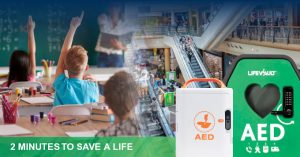
Cardiac arrest can happen to anyone, anywhere and anytime. Every second counts in a cardiac emergency.
Research shows that the chances of survival from cardiac arrest decrease by around 10% for every minute that passes without intervention. An Automated External Defibrillator (AED) can deliver a potentially life-saving shock and significantly improve the chances of survival when used alongside CPR.
BS8599-1:2019+A1:2026 places particular emphasis on access to an AED. Where there are five or more people on site, the standard requires access to an AED that can be reached and used within two minutes.
This means simply having an AED somewhere on your premises isn’t enough. You need to consider where it is located, how quickly it can be reached and whether people know where it is.
Larger workplaces such as distribution warehouses, golf courses and leisure facilities will need more AEDs.
Visibility and accessibility are critical. An AED should be readily identifiable and available when needed, while also being stored appropriately so that it remains ready for use.
Make first aid part of your workplace safety plan
First aid arrangements should be reviewed rather than treated as a one-off purchase. Regular checks help organisations identify expired or missing items, account for workplace changes and confirm that equipment remains accessible.
As part of your review, consider the following questions:
- Do our first aid kits reflect our current employee numbers and workplace risks?
- Have we assessed the need for dedicated burns and eyewash provision?
- Is our AED provision suitable for the size and layout of the site?
- Can first aid equipment be identified and accessed quickly?
- Do employees know where equipment is located?
- Are inspection and maintenance responsibilities clearly assigned?
- Have our arrangements kept pace with changes to the workplace?
- Being prepared means giving your people access to the right first aid before an emergency happens.
Ready for the workplace
The new BS8599-1:2019+A1:2026 standard reinforces the importance of having appropriate first aid provision in place and ready to respond when it matters most.
Bunzl Cleaning & Hygiene Supplies can support customers in reviewing their workplace requirements and identifying suitable first aid, burns, eyewash and AED solutions based on their operational needs. This helps bring equipment, accessibility and ongoing provision into one considered workplace safety approach.
Review your workplace first aid provision with BCHS.
Speak to our team about the requirements of your site and the solutions available to support a safer, better-prepared workplace. Explore our workplace first aid solutions
Be compliant. Be prepared. Keep your people safe.