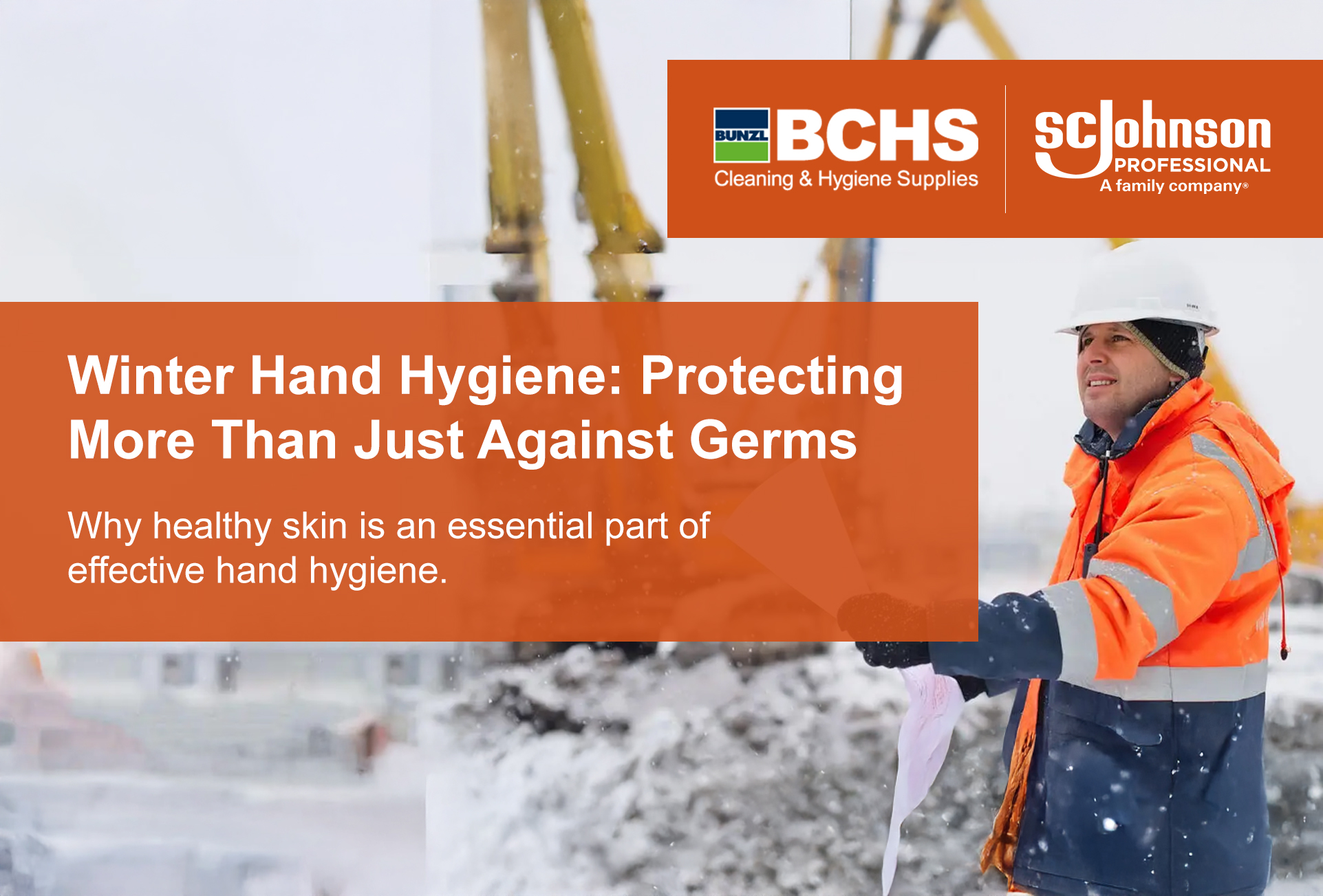
As winter approaches, organisations often focus on one thing: reducing the spread of seasonal illnesses.
It’s easy to see why. Higher rates of coughs, colds and flu can increase absenteeism, place additional pressure on teams, and impact productivity across workplaces. Good hand hygiene remains one of the most effective ways to help reduce the spread of germs, making it a key priority for employers during the colder months.
However, there is another winter challenge that receives far less attention: skin health.
The very behaviours that help protect people during cold and flu season, such as frequent hand washing and sanitising, can also place additional stress on the skin. Combined with colder temperatures, lower humidity and harsh winter weather, this can leave hands dry, irritated and vulnerable to damage.
Creating healthier workplaces during winter means looking beyond hygiene alone and considering how skin health and hand hygiene work together.
The Hidden Challenge of Winter Hand Hygiene
Hand hygiene is essential throughout the year, but winter often leads to increased hand washing and sanitiser use as organisations encourage people to reduce the spread of seasonal illnesses.
While these measures are important, repeated exposure to water, soaps, sanitisers and workplace contaminants can gradually affect the skin’s natural protective barrier.
For many workers, especially those in cleaning, facilities management, healthcare, manufacturing and food production, this exposure is not limited to winter months. It is a daily occupational challenge.
Over time, the cumulative impact of minor irritants can contribute to skin problems, including contact dermatitis, which remains one of the most common occupational skin conditions.
Research suggests that around 80% of contact dermatitis cases are caused by cumulative exposure to weak irritants that workers encounter throughout the working day.*
When skin becomes dry, cracked or damaged, the issue extends beyond comfort. Employees may experience discomfort, reduced compliance with hand hygiene protocols and, in some cases, absence from work.
Why Skin Health Matters to Employees
Workplace skin health is often viewed as an individual wellbeing issue, but it can have wider operational implications.
Supporting healthy skin can contribute to:
- Improved employee comfort and wellbeing
- Better compliance with hand hygiene routines
- Reduced risk of occupational skin conditions
- More positive workplace experiences for employees
- Lower disruption associated with skin-related absence
The financial impact can also be significant. Studies suggest that each case of occupational dermatitis has the potential to cost employers up to £6,000 through treatment costs, lost productivity, and absence.*
For organisations committed to maintaining healthy, productive workplaces, prevention is often far more effective than intervention.
A More Balanced Approach to Hand Hygiene
Effective hand hygiene should not come at the expense of skin health.
The most successful workplace hygiene programmes recognise that protecting skin and reducing the spread of germs are complementary objectives rather than competing priorities.
This is where the concept of a complete skin care routine becomes important.
Rather than focusing exclusively on washing or sanitising, a comprehensive approach supports the skin before, during and after exposure to workplace conditions.
A simple framework can help organisations build a more sustainable hand hygiene strategy:
1. Protect
Before work begins, skin protection creams can help support the skin against workplace contaminants and challenging working conditions.
By creating an additional layer of defence, they can help reduce the impact of repeated exposure throughout the day.
2. Cleanse
Regular and effective handwashing remains a cornerstone of infection prevention.
Providing high-quality soap products and encouraging good handwashing habits helps remove dirt, contaminants and germs from the skin.
3. Sanitise
There are many situations where access to soap and running water may not be practical.
Providing hand sanitiser at key touchpoints throughout a workplace helps employees maintain good hand hygiene when they are on the move or between tasks.
4. Restore
After repeated washing and sanitising, moisturising the skin becomes increasingly important.
Applying a restore cream during breaks and at the end of the working day helps replenish moisture and support the skin’s natural barrier function.
The operation Impact of Getting it Right
When workplace hand hygiene programmes focus on both protection and prevention, organisations can support healthier outcomes for their people throughout winter.
Employees benefit from accessible hygiene solutions that make it easier to maintain good habits, while skin care measures help reduce the risk of dryness and irritation associated with increased hand hygiene activity.
The result is a more balanced approach that supports wellbeing, hygiene and workplace performance at the same time.
Rather than viewing hand hygiene as a single action, organisations should consider it as part of a wider skin health strategy, particularly during the winter months when hands are exposed to additional environmental stress.
Ready to support your workforce this winter?
Creating a winter-ready workplace means taking a balanced approach to hand hygiene and skin health. By providing the right products and encouraging good hand care habits, organisations can help protect their people while maintaining high hygiene standards throughout the colder months.
Find out more about SC Johnson Professional’s Winter Ready programme and explore practical solutions designed to support hand hygiene and skin health in the workplace.
 The Biology of Washroom Odour: Tackling the Problem at Its Source