In today’s facilities management environment, housekeeping teams are being asked to do more than ever before – working faster, maintaining higher hygiene standards, and delivering a consistent experience across increasingly complex environments.
But while many organisations focus on chemicals, consumables, or staffing levels, one critical factor is often overlooked:
The cleaning trolley itself.
Across healthcare, hospitality, education and commercial settings, inefficient cleaning setups can quietly impact:
- Productivity
- Staff wellbeing and fatigue
- Operational costs
- Cleaning consistency
- Guest and customer perception
The good news? More organisations are now recognising that smarter trolley systems can transform day-to-day operations — improving workflow, reducing unnecessary movement, and supporting more efficient cleaning routines.
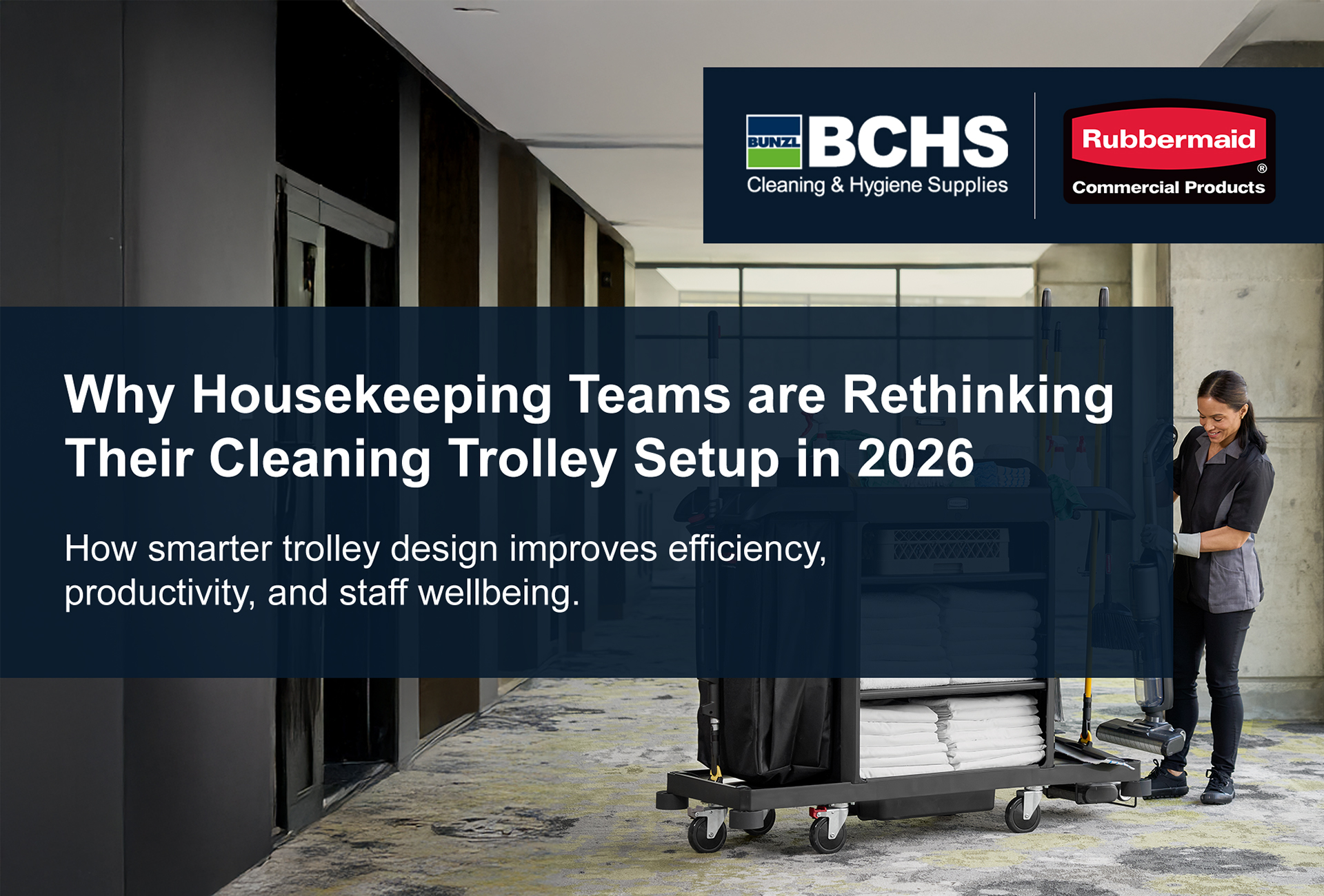
At BCHS, we work in partnership with Rubbermaid Commercial Products to help facilities transform their cleaning operations through smarter, more efficient trolley systems. By focusing on workflow, ergonomics and practical design, these solutions are built to support teams in working more effectively – not just harder.
Modern cleaning trolleys are no longer seen as simple transport equipment. Instead, they are a key part of a smarter, more efficient cleaning system – helping to improve organisation, reduce disruption, and support consistent, high standards across every environment.
In 2026, the shift is clear – housekeeping teams aren’t just upgrading equipment – they’re redesigning how cleaning works.
Why does cleaning trolley design matter?
A poorly designed trolley does more than slow teams down — it creates ongoing inefficiencies throughout the working day.
When operatives need to:
- Return frequently for supplies
- Carry multiple tools separately
- Work around awkward or bulky layouts
- Manage unstable or inefficient waste systems
… tasks become more physically demanding, more time-consuming, and harder to perform consistently.
Modern trolley systems are increasingly designed around workflow optimisation, ensuring operatives can carry everything they need safely, securely, and ergonomically — all within easy reach.
What makes a cleaning trolley more efficient?
Today’s facilities are looking for trolley systems that actively support better ways of working.
This includes:
- Better organisation of tools and consumables
- Faster facility turnaround, particularly in high-traffic areas
- Reduced manual handling and physical strain
- Quieter operation in sensitive environments
- Improved storage capacity to reduce repeat trips
Features such as integrated tool holders, secure compartments, and smooth manoeuvrability help reduce wasted movement during shifts — something that can have a measurable impact over time.
For busy teams, these incremental improvements support more consistent standards while helping staff work more effectively throughout the day.
Why is ergonomics becoming more important in Facilities Management?
Cleaning remains one of the most physically demanding operational roles within facilities management.
Repeated lifting, pushing, bending, and carrying can contribute to:
- Fatigue
- Repetitive strain injuries
- Reduced productivity
- Lower staff satisfaction and retention
As a result, many organisations are placing greater focus on ergonomics and staff wellbeing when reviewing their equipment.
This is driving the adoption of:
- Lightweight trolley systems
- Smooth-rolling castors for easier manoeuvrability
- Front-access waste collection to minimise strain
- Foldable and flexible transport systems
The aim is simple: reduce physical strain while improving overall efficiency.
Why are more facilities moving to high-capacity trolley systems?
One of the biggest sources of inefficiency in cleaning operations is unnecessary movement.
High-capacity trolley systems help reduce:
- Trips back to storage rooms
- Time spent restocking
- Interruptions during cleaning routines
This allows operatives to spend more time cleaning — and less time moving between locations.
In large or high-footfall environments, this shift can significantly improve productivity and workflow consistency.
How can cleaning trolleys improve guest and customer experience?
Cleaning equipment is no longer hidden behind the scenes.
In many environments, including healthcare, hospitality and commercial spaces, cleaning activity takes place in full view of customers, patients, and visitors.
As a result, trolley design now plays an important role in how facilities are perceived.
Modern systems support:
- Cleaner, more professional presentation
- Concealed waste storage to reduce visual clutter
- Quieter movement across different floor types
- More discreet, organised workflows
These improvements help maintain a more professional environment while supporting operational efficiency behind the scenes.
Why are flexible waste collection systems becoming essential?
Waste management is becoming increasingly complex, particularly with growing requirements around segregation and compliance.
Traditional waste transport methods can be inefficient, bulky, and difficult to manage within modern facilities.
Flexible solutions — such as collapsible waste transport systems and dual-stream collection setups — are helping teams to:
- Move larger volumes more efficiently
- Improve waste segregation practices
- Reduce manual handling
- Optimise storage space when not in use
In space-constrained environments, collapsible systems can significantly reduce storage footprint, making them a practical and scalable solution for many facilities.
Every movement matters
Cleaning efficiency isn’t only about working harder – it’s about building smarter systems around the people doing the work.
From ergonomic trolley designs to flexible waste collection solutions, the right setup can help facilities to:
- Improve productivity
- Reduce operational strain
- Support consistent cleaning standards
- Create more professional, organised environments.
Ready to improve efficiency, reduce strain and streamline your cleaning setup? Learn more about Rubbermaid Commercial Products here.