As expectations around hygiene continue to evolve, are traditional cleaning approaches enough to support long-term performance?
Across facilities management, healthcare, education, and public-sector environments, cleaning teams are being asked to deliver more than ever before. Alongside maintaining hygiene standards, organisations are under increasing pressure to improve efficiency, manage costs, support sustainability goals and create healthier environments for building users.
For many years, cleaning strategies have focused on immediate outcomes: removing visible dirt, disinfecting surfaces and responding to issues as they arise. While these objectives remain important, there is growing recognition that a reactive approach may not always deliver the most effective long-term results.
As a result, many organisations are exploring cleaning solutions that continue working beyond the point of application, helping to support cleanliness, hygiene and operational efficiency over time.
One area attracting increasing attention is microbial cleaning technology.
Cleanline Pure is Cleanline’s portfolio of probiotic, enzymatic and lactic acid-based cleaning products, designed to support a wide variety of cleaning and disinfection applications. The range includes microbial solutions that help organisations move beyond traditional clean-and-repeat cycles and adopt a more proactive approach to hygiene management.
This article explores why microbial cleaning is becoming an increasingly important part of modern cleaning strategies and how it can contribute to long-term efficiency.
Why is microbial cleaning gaining attention?
Unlike traditional cleaning products that stop working once a surface has been cleaned and dried, microbial cleaning products use beneficial bacteria to continue breaking down organic matter after application.
This ongoing activity can help tackle the root causes of recurring issues such as organic build-up, blocked drains and persistent odours, supporting cleaner environments between scheduled cleans.
As organisations seek longer-lasting outcomes, this preventative approach is becoming increasingly attractive.
Moving from Reactive to Proactive Cleaning
Many cleaning programmes have historically focused on addressing problems once they appear. However, facilities teams are increasingly looking at ways to prevent issues from developing in the first place.
By continuously breaking down organic residues, microbial products can help:
- Reduce repeat cleaning requirements
- Support drain performance
- Minimise recurring odours
- Improve consistency between cleaning visits
This can be particularly beneficial in high-traffic environments where maintaining hygiene standards presents an ongoing challenge.
Supporting Operational Efficiency
Labour, product costs and resource pressures continue to influence cleaning strategies across all sectors.
Because microbial cleaning solutions remain active after application, organisations may find opportunities to review cleaning frequencies and reduce the need for repeated interventions in some areas.
Over time, this can support:
- More efficient use of cleaning resources
- Reduced product consumption
- Less rework for cleaning teams
- Improved productivity across sites
Rather than simply delivering a single cleaning event, microbial solutions contribute to a longer-term approach to hygiene management.
Supporting Sustainability Objectives
Sustainability considerations are becoming increasingly important within cleaning and facilities management.
Where appropriate, microbial products can support environmental goals by helping organisations reduce reliance on harsher chemicals and minimise unnecessary product usage.
Potential benefits may include:
- Reduced chemical consumption
- Lower resource use
- Fewer repeat cleans
- Reduced waste generation
These outcomes can help support wider sustainability and ESG objectives whilst maintaining effective cleaning standards.
Creating Healthier Environments
Alongside efficiency and sustainability, there is growing interest in how cleaning strategies can contribute to healthier indoor environments.
Maintaining surfaces that are free from excessive organic build-up can help support cleaner, more pleasant spaces for building users. In environments such as healthcare settings, leisure facilities, workplaces and public buildings, this is becoming an important consideration within wider wellbeing strategies.
There is also growing interest in cleaning approaches that reduce exposure to high-hazard chemicals wherever suitable alternatives exist. By supporting effective cleaning while helping to reduce the need for repeated chemical interventions in some applications, microbial cleaning can contribute to safer environments for both cleaning operatives and building occupants. As part of wider wellbeing and workplace health initiatives, many organisations are exploring cleaning strategies that support a cleaner, healthier and more comfortable experience for building users.
The Wider Picture
The growing interest in microbial cleaning reflects a broader shift taking place across the industry.
Today’s cleaning strategies are increasingly focused on long-term outcomes rather than short-term fixes, with organisations considering:
- Cost efficiency
- Operational performance
- Sustainability goals
- User wellbeing
- Consistency across multiple sites
Microbial cleaning products are not a replacement for every cleaning task, nor are they intended to be an all-or-nothing solution. However, when used in the right applications, they can play an important role within a modern, preventative cleaning programme.
As facilities teams continue to review their cleaning strategies, solutions that support ongoing performance, healthier environments and long-term efficiency are becoming an increasingly important part of the conversation.
To find out more about the Cleanline Pure range and how microbial cleaning solutions can support your cleaning strategy, visit Cleanline Pure | BCHS or speak to your BCHS account manager.
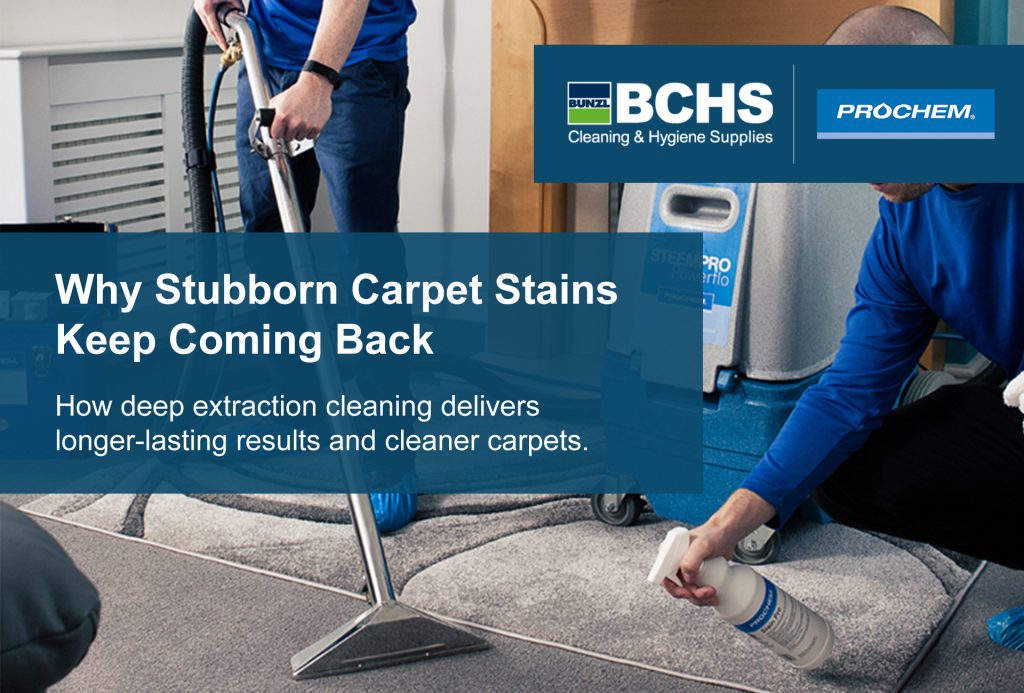 Why stubborn carpet stains keep coming back – and how professional extraction cleaning changes the results