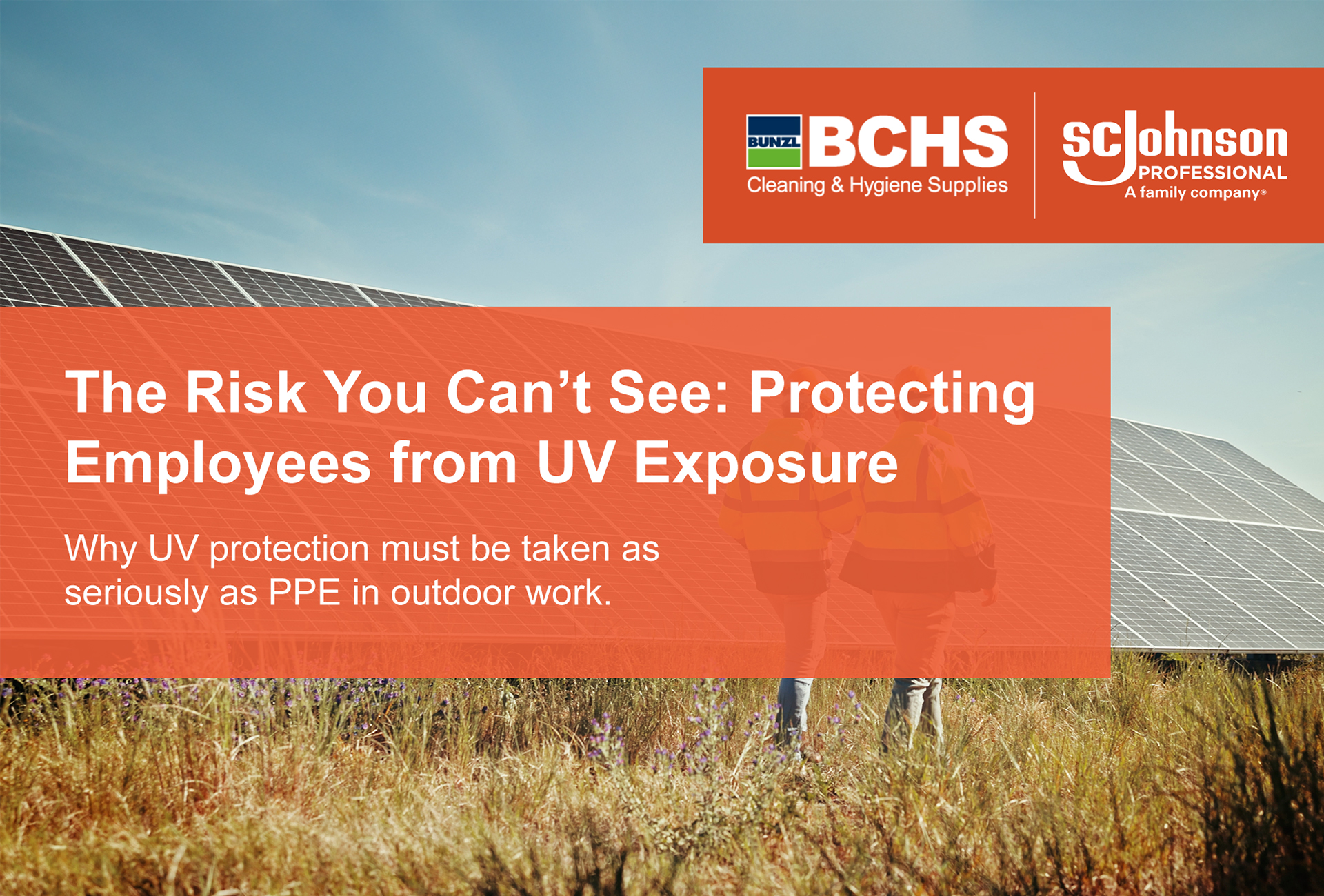
You can’t see UV radiation. You can’t feel it. And by the time the damage shows, years may have passed. That’s what makes it such a difficult risk to manage – and such an easy one to overlook.
But the impact of UV exposure, and the long-term effect it can have on workers, cannot be ignored. As an employer, you have a clear duty of care to protect your people from harm, including the risks posed by the son.
The impact of UV exposure
UV (ultraviolet) radiation is produced by the sun. In small amounts, it’s essential for vitamin D production. However, prolonged or repeated exposure can pose serious health risks, including skin cancer.
Those risks are increasing. Across Europe, skin cancer rates are rising, with the sun identified as a major cause – up to 90% melanomas are linked to UV exposure2.
And the outlook is concerning.
Evidence suggests skin cancer rates will continue to grow over the coming decades– driven by:
- An ageing workforce with decades of accumulated UV damage
- Limited awareness of risks
- Changing weather patterns and increased exposure.
The impact on outdoor workers
While everyone is affected by UV exposure, the risk to outdoor workers is significantly higher.
Between 2000 and 2019, skin cancer deaths attributable to occupational exposure to sunlight nearly doubled. Despite this, UV radiation remains one of the most common – and least managed – occupational hazards.
Less than a third (29%) of outdoor workers report regularly using UV protection5, while just 24% say that protective measures are provided by their employer and that they’ve activity encouraged to use them6.
Although legal requirements vary, employers have a responsibility to protect workers from long-term harm. This means not only providing practical protection but also embedding UV awareness into everyday working practices – treating UV protection with the same seriousness as PPE or hand hygiene.
How to protect your employees
For anyone managing the risks posed by outdoor work, particularly in sectors such as construction, agriculture, maintenance, and facilities management, the following checklist can help reduce the risks of UV exposure:
- What is the UV index?
Adopted by the World Health Organization, the UV Index indicates the daily UV levels and advises when sun protection measures are required. Ranging from 0 (low) to 11+ (extreme), if the daily index is 3 or above, your employees should be using UV protection, even if it’s cloudy outside.
- Are there shaded areas?
If your people are working outside, do they have access to shaded areas where they can take a break? If not, can you create some?
- Can you adapt or reduce exposure?
Are there any opportunities to adapt your working practices to limit your people’s exposure to harmful UV radiation? Whether it’s changing working hours or adapting workflows to keep them in shaded areas during the hottest part of the day, a few simple changes can add up to make a big impact.
- Are your employees protected?
Have you provided access to protective materials, including clothing and sunglasses? Do they also have access to adequate sun protection cream, such as the Stokoderm® Sun Protect range, which has been specifically designed with professionals in mind?
Take action now
As an employer, you play a crucial role in mitigating the risks of sun exposure and protecting your workforce. Providing high-quality protective materials is essential – but so is building a culture where UV protection is part of daily routine, not an afterthought.
By taking action now, you can significantly reduce risk, support long-term health, and demonstrate a proactive approach to employee wellbeing.
For more information on UV protection, visit BCHS for comprehensive advice on sun protection, alongside practical guidance to help keep your employees safe.
1 – https://pmc.ncbi.nlm.nih.gov/articles/PMC10741796/
2 – US Department of Health and Human Services/ Cancer Research UK.
3 – ECIS – European Cancer Information System.
4 – https://www.who.int/news/item/08-11-2023-working-under-the-sun-causes-1-in-3-deaths-from-non-melanoma-skin-cancer–say-who-and-ilo
5 – https://pmc.ncbi.nlm.nih.gov/articles/PMC5011087/
6 – SC Johnson Professional’s 2020 survey of 114 UK health and safety officials.