For something experienced by around half the world’s population, menstruation has spent a surprisingly long time hidden behind silence and stigma.
That is exactly why Menstrual Hygiene Day, held every year on 28th May 2026, matters.
Launched by WASH United and first recognised in 2014, the day was created to challenge stigma, improve education and encourage more open conversations around menstrual health and hygiene.
A #PeriodFriendlyWorld is one where menstruation is understood as a normal part of life, where nobody feels embarrassed or held back because of their period, and where everyone has access to the products, facilities and support they need.
At BCHS, we recognise that menstrual health is about far more than period products. It is linked to dignity, wellbeing, equality and even environmental sustainability.
Why the conversation matters
Around the world, millions still struggle to access period products, suitable facilities and reliable information. Even here in the UK, period poverty and stigma continue to affect people’s daily lives.
The Hygiene Bank works to address one of the biggest barriers surrounding menstrual health: access.
An estimated 1 in 8 people in the UK struggle to afford period products, forcing some people to choose between essential hygiene items and other everyday costs.
Through community partnerships and donations, The Hygiene Bank helps provide hygiene essentials, including menstrual products, to those who need them most. Their work is an important reminder that period care should never be viewed as a luxury.
Access is only part of the issue. Stigma and embarrassment around menstruation continue to shape how people experience and talk about periods. Too often, periods are treated as something people should hide.
That silence matters.
When menstruation remains taboo, people may feel less comfortable seeking support, asking questions or discussing their experiences. This can affect confidence, wellbeing and workplace inclusion, while limiting wider conversations about how we create more supportive and inclusive environments. It can also impact education, as stigma and discomfort may reduce confidence in attending school, participating in lessons or accessing the support and menstrual products needed to manage periods with dignity and comfort.
Education plays an important role in changing this. When young people learn early that menstruation is a normal biological process, understanding grows, and stigma begins to fade. That conversation should not stop in schools. Workplaces, homes and communities all have a role to play in helping people feel supported rather than embarrassed.
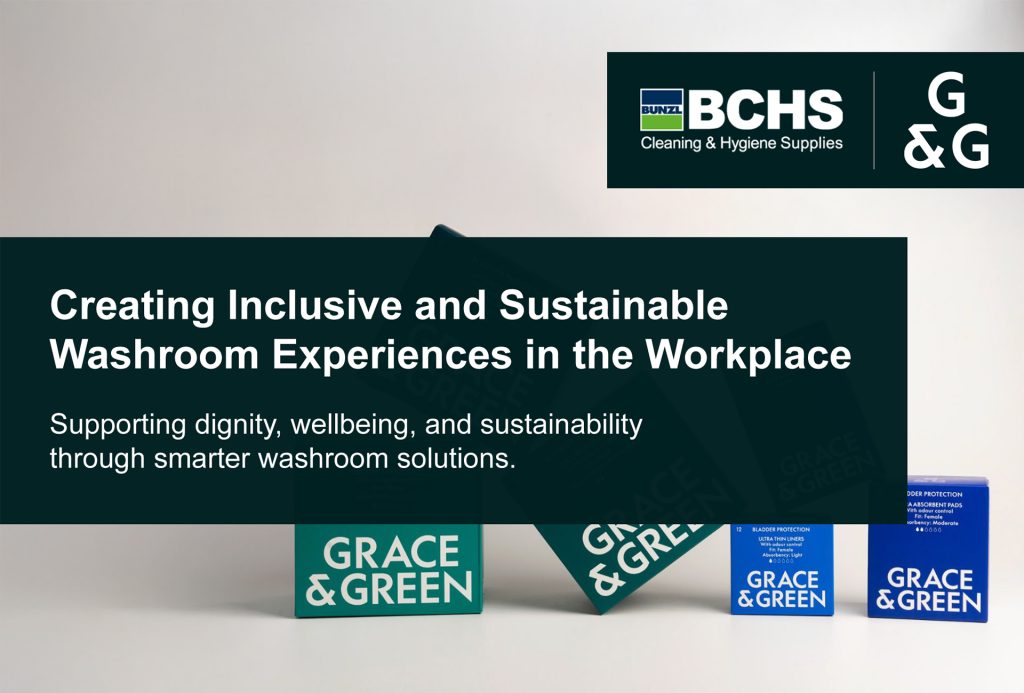
Grace & Green is helping organisations move menstrual health further into the mainstream by supporting more period-positive and inclusive workplaces. Alongside offering products made from sustainable bamboo and organic cotton, the business places strong emphasis on period dignity, education and open conversation around menstrual health.
Through workplace initiatives and accessible product schemes, Grace & Green supports organisations looking to create more inclusive and period-positive workplaces. Their approach reflects a growing shift in how organisations view menstrual health, not simply as a personal issue, but as part of wider workplace wellbeing and inclusion strategies.
The environmental side of the conversation
Menstrual health also has an important environmental dimension.
Some conventional period products can contain up to 90% plastic and may take hundreds of years to break down.
As awareness around sustainability grows, businesses and consumers are increasingly looking for period care solutions that reduce environmental impact.
TOTM is helping challenge conventional period products. Their products are made using 100% organic cotton and are produced without fragrance, dyes, chlorine bleach, artificial absorbents or PFAS.
Alongside reducing plastic use, TOTM also promotes reusable period care options and recyclable packaging as part of a wider effort to reduce the environmental impact associated with menstruation. By placing transparency around ingredients and sustainability at the centre of its approach, the business is helping consumers make more informed and environmentally responsible choices around period care.
One often overlooked part of menstrual health is what happens after products are used.
Disposal can still feel uncomfortable or embarrassing for many people, particularly in shared bathrooms or where suitable facilities are lacking. This can contribute directly to environmental issues such as flushing and improper disposal.
FabLittleBag is working to tackle this challenge through discreet disposal bags designed to help people dispose of used period products hygienically and privately. Rather than simply telling people not to flush products, their approach focuses on understanding why people flush them in the first place and providing more practical, discreet disposal options.
By helping turn “flushers into binners”, FabLittleBag is contributing to cleaner waterways, reduced sewer blockages and more open conversations around menstrual health and disposal.
Creating Period-Friendly Workplaces
Creating a #PeriodFriendlyWorld also means ensuring people have access to suitable facilities and support in the places where they spend much of their time.
While there is currently no legal requirement for employers in the UK to provide free period products, organisations are required to provide suitable welfare and sanitary disposal facilities as part of workplace hygiene standards.
Increasingly, businesses are also recognising that menstrual health forms part of wider workplace wellbeing, equality and inclusion.
As a hygiene and facilities supplier, BCHS sees first-hand how workplace environments, washroom design and access to suitable facilities can influence comfort, confidence and behaviour.
Simple actions, whether through improved facilities, better access to products or fostering more open conversations, can help create more inclusive and supportive workplaces.
A #PeriodFriendlyWorld Benefits Everyone
Menstrual Hygiene Day reminds us that progress happens when people work together.
In just over a decade, the conversation around menstruation has moved from silence to global awareness. Yet there is still more to do.
At BCHS, we are proud to work alongside supplier partners, helping drive this progress in different ways. Through sustainable innovation, improved access and stigma reduction, organisations such as TOTM, Grace & Green, The Hygiene Bank and FabLittleBag are helping create a future where menstrual health is recognised for what it is: a normal, important and shared part of life.
This Menstrual Hygiene Day, we support the movement towards a more informed, inclusive and #PeriodFriendlyWorld