In the cleaning and hygiene industry, janitorial textiles such as mop heads, cleaning cloths, and other textile-based accessories are essential tools in daily operations. Yet, once these items reach the end of their life, many organisations face the same challenge: what do we do with them now?
For years, the answer has been landfill or incineration. But with growing environmental responsibilities, rising ESG expectations and increasing awareness of textile waste’s impact, this is no longer a sustainable route. We are helping organisations rethink this waste stream by introducing a practical, measurable way to address janitorial textile waste: zero waste boxes.
The hidden problem: janitorial textile waste
While most conversations about textile waste focus on fashion or household clothing, the issue extends far beyond wardrobes.
The UK generates 1.45 million tonnes of used textiles annually, and although this figure includes clothing, a significant portion of textile waste comes from commercial operations – including cleaning and hygiene. Historically, much of this material ends up disposed of rather than recycled. In 2021 alone, 711,000 tonnes of used textiles were discarded through household waste streams, highlighting a national gap in reuse and recycling capacity.
Even when textiles are recycled, the proportion is low: less than 1% of textiles globally are recycled back into new textiles. For janitorial textiles – often soiled, worn or constructed from mixed fibres – recycling options are even more limited.
This is exactly where zero-waste boxes make a difference.
Introducing zero waste boxes: a simple, circular solution
Our zero-waste boxes provide an all‑in‑one recycling system for janitorial cleaning textiles. Whether it’s mop heads, microfibre cloths, or textile cleaning accessories, these items can be placed directly into the box – no sorting or separating required.
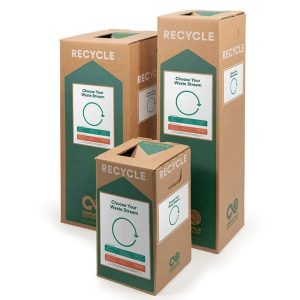
How it works:
- Assemble the box – delivered flat‑packed for easy storage.
- Fill it with used cleaning textiles. Rinsing is recommended if convenient, but not required.
- Seal and return using the included prepaid shipping.
- TerraCycle processes the material, transforming it into new raw materials for manufacturing.
This provides a guaranteed recycling route for hard-to-recycle items, keeping them out of landfills and incineration.
Reducing environmental impact through recycling
The environmental impact of textile waste is significant. The UK’s textile consumption is responsible for 32.9 million tonnes of CO₂ emissions annually. Much of this impact is driven by producing new textiles and disposing of old ones.
By choosing zero-waste boxes, you help reduce:
- Landfill and incineration volumes: Hundreds of thousands of tonnes of textiles still end up in landfill each year – 350,000 tonnes of clothing alone in the UK. Janitorial textiles contribute to this due to limited recycling pathways.
- Carbon emissions: Recycling textiles reduces the need to produce new materials, avoiding emissions and conserving resources. International studies suggest that fibre-to-fibre recycling can reduce carbon footprints by up to 90% for certain fibre types compared to virgin production.
- Resource consumption: Textile production is highly resource‑intensive, relying heavily on water and chemical inputs. By recycling used textiles, we reduce the demand for virgin materials and extend the useful life of existing fibres – even for items traditionally considered ‘hard to recycle.’
Supporting your ESG goals
Organisations across every sector are being asked to demonstrate meaningful environmental impact. With regulations tightening and stakeholders demanding transparency, waste reporting and carbon accounting matter more than ever.
 Zero-waste boxes help you:
- Increase recycling rates across cleaning operations.
- Reduce Scope 3 emissions associated with waste disposal and procurement.
- Improve ESG reporting with a measurable, trackable recycling solution.
- Show tangible environmental action – not just policy statements.
Most importantly, your team can participate in sustainability without extra workload. It’s simple, convenient and operationally seamless.
Creating a circular economy for cleaning textiles
Once returned, the textiles in your zero waste box are sorted, processed and transformed into new raw materials. A small change with a powerful impact.
At Bunzl Cleaning & Hygiene Supplies, we believe sustainability should be practical, accessible, and results-driven. Zero-waste boxes turn what used to be a waste headache into an opportunity for positive environmental change.
From reducing landfill volumes to lowering carbon emissions, from boosting ESG performance to actively participating in the circular economy – this simple solution delivers real, measurable benefits.
Because when it comes to sustainability, even small actions can create a big impact.
Read more about our Sustainable Solutions initiatives here.