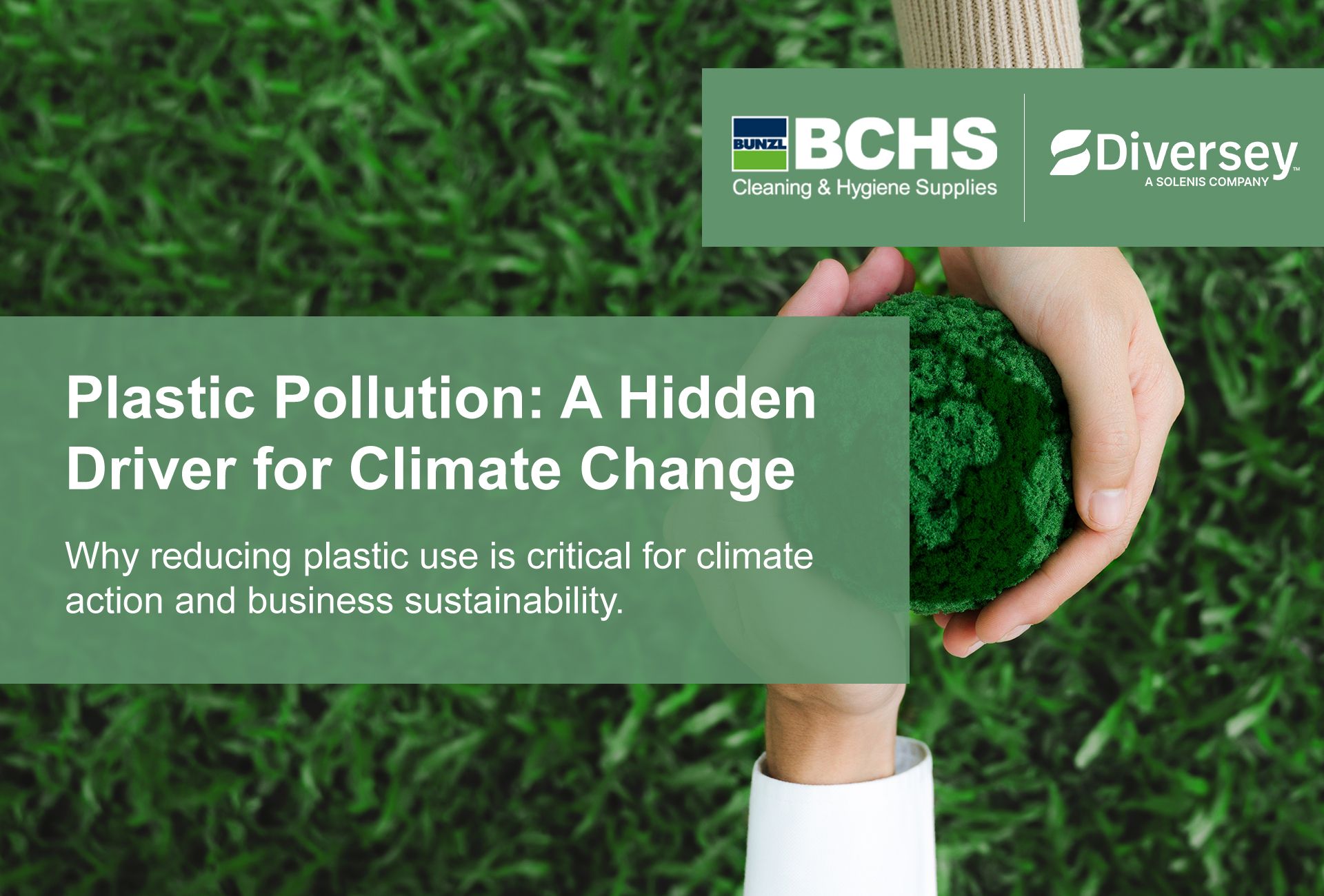
For businesses, reducing plastic use isn’t just an environmental imperative – it’s a strategic move toward sustainability and compliance with evolving regulations.
Plastic use poses a serious environmental risk, contributing to global waste management challenges and polluting ecosystems on land and in waterways and oceans. The problem goes beyond litter – it’s a major contributor to climate change.
Companies that embrace sustainable cleaning solutions can:
- Improve their carbon footprint by cutting emissions linked to plastic production and disposal
- Enhance profitability through operational efficiencies and reduced waste costs
- Strengthen their reputation with customers and stakeholders who value sustainability
According to the Many Shades of Green Whitepaper¹, half of the companies across major markets prefer to work with organisations that demonstrate strong environmental responsibility. This means sustainability isn’t just a trend; it’s a competitive advantage.
At BCHS, we offer a wide range of products designed to help reduce environmental impact. We’ve also developed five key solutions that support organisations in making more sustainable choices across their operations.
To learn more about BCHS and our commitment to a more sustainable future, click here
Understanding Sustainability: A Business Imperative
To comply with EU regulations and appeal to environmentally conscious clients, businesses must understand what sustainability truly means. The Brundtland Report² defines sustainability as:
“Development that meets the needs of the present without compromising the ability of future generations to meet their own needs.”
This principle requires organisations to prioritise the three Ps:
- People – ensuring social responsibility and fair practices
- Planet – reducing environmental impact through actions like cutting plastic use
- Prosperity – maintaining financial health while embracing sustainable strategies
Sustainability isn’t just a compliance checkbox; it’s a framework for long-term business success. Organisations that embed sustainable principles into their operations position themselves as industry leaders, especially as environmental responsibility becomes a defining factor in customer and stakeholder expectations.
With 91% of plastic waste never being recycled, the need for responsible product design and procurement has never been greater. At BCHS, we partner with suppliers who actively reduce pressure on waste streams and landfill by prioritising improved recyclability, responsible material choices and circular solutions. Together, we’re helping businesses make smarter, more sustainable decisions every day.
Plastic Pollution: A Critical Global Issue
Plastic pollution is not just an environmental concern; it is a global crisis. The Ellen MacArthur Foundation³ warns that by 2025, the amount of plastic in our oceans could outweigh fish biomass. This stark prediction underscores the urgency for change.
To combat this, the EU has set ambitious targets: by 2030, all plastic must be reusable or recyclable. Businesses must align their operations with these goals, striving to remove or reduce plastic wherever possible.
Globally, it is estimated that we generate over 400 million tonnes of plastic waste every year. At BCHS, we are committed to helping organisations tackle their challenge directly. The BCHS Carbon Forecast Tool demonstrates how small changes to customers’ patterns and ordering processes can significantly reduce carbon emissions and support more sustainable operations. Alongside this, our Sustainable Insights Reporting Tool helps customers track plastic packaging avoidance, carbon reduction, and overall circular performance, giving them visibility of the positive impact their choices are making.
Leading by Example
Diversey demonstrates how companies can lead the way with its motto: Reduce, Reuse, Recycle, Rethink⁴. For more information, click here
This approach includes:
- Using biodegradable organic materials in product design
- Offering solutions that lower carbon footprints and reduce transport costs
By rethinking traditional practices, businesses can meet regulatory requirements, appeal to environmentally conscious clients, and contribute to a sustainable future.
The Bottom Line
Plastic pollution is a major contributor to climate change, responsible for 3.4% of global greenhouse gas emissions annually (OECD). The UK uses five million tonnes of plastic each year, nearly half for packaging⁵. If the current trend continues, emissions from plastics could reach 1.34 gigatons annually by 2030, equivalent to 295 coal-fired power plants (CIEL).
Beyond waste, plastic production and incineration release harmful gases, accelerating global warming. Businesses play a critical role in addressing this issue by reducing single-use plastics, adopting circular economy principles, and innovating with sustainable materials.
At BCHS, sustainability is embedded in our strategic direction and our day-to-day decision-making. The Sustainability Report reflects not only the progress we have made but also our ongoing commitment to protecting the environment, building transparent and ethical supply chains, and supporting the well-being of the global communities we serve.
As we look to the future, BCHS remains dedicated to leading with purpose, empowering our partners, and delivering meaningful, measurable impact. Click here to know more.